Crème Brûlée
Ingredients
2 cups (480 ml) heavy cream
5 egg yolks
1 tsp (5 ml) vanilla extract
½ cup (100 g) granulated sugar (plus more for topping)
⅛ tsp (0.75 g) salt
Ramekins
Kitchen torch
Heat the Cream
Preheat the oven to 325°F (165°C).
In a saucepan, combine the heavy cream and salt. Heat gently over low heat until just warm. Do not let it boil. Remove from heat and stir in the vanilla extract.
Mix the Eggs and Sugar
In a bowl, whisk the egg yolks and sugar together until well combined and slightly lighter in color.Temper the Eggs
Slowly whisk about ¼ of the warm cream into the egg mixture. Once incorporated, pour the egg mixture back into the remaining cream and stir until smooth.Fill Ramekins and Bake
Pour the custard into ramekins. Place ramekins in a baking dish and fill the dish with boiling water halfway up the sides of the ramekins.
Bake for 30–40 minutes, until the centers are just set.Cool and Chill
Remove ramekins from the water bath and allow to cool completely. Refrigerate for several hours or up to two days before brûléeing.Brûlée the Sugar
When ready to serve, sprinkle an even layer of sugar over each custard. Use a kitchen torch to melt and caramelize the sugar until deeply golden and crackly.Serve
Serve immediately once the sugar has hardened.
Additional Notes
Do not boil the cream. You want it warm, not hot—boiling the cream can scramble the eggs when you temper them, and that’s a guaranteed disaster.
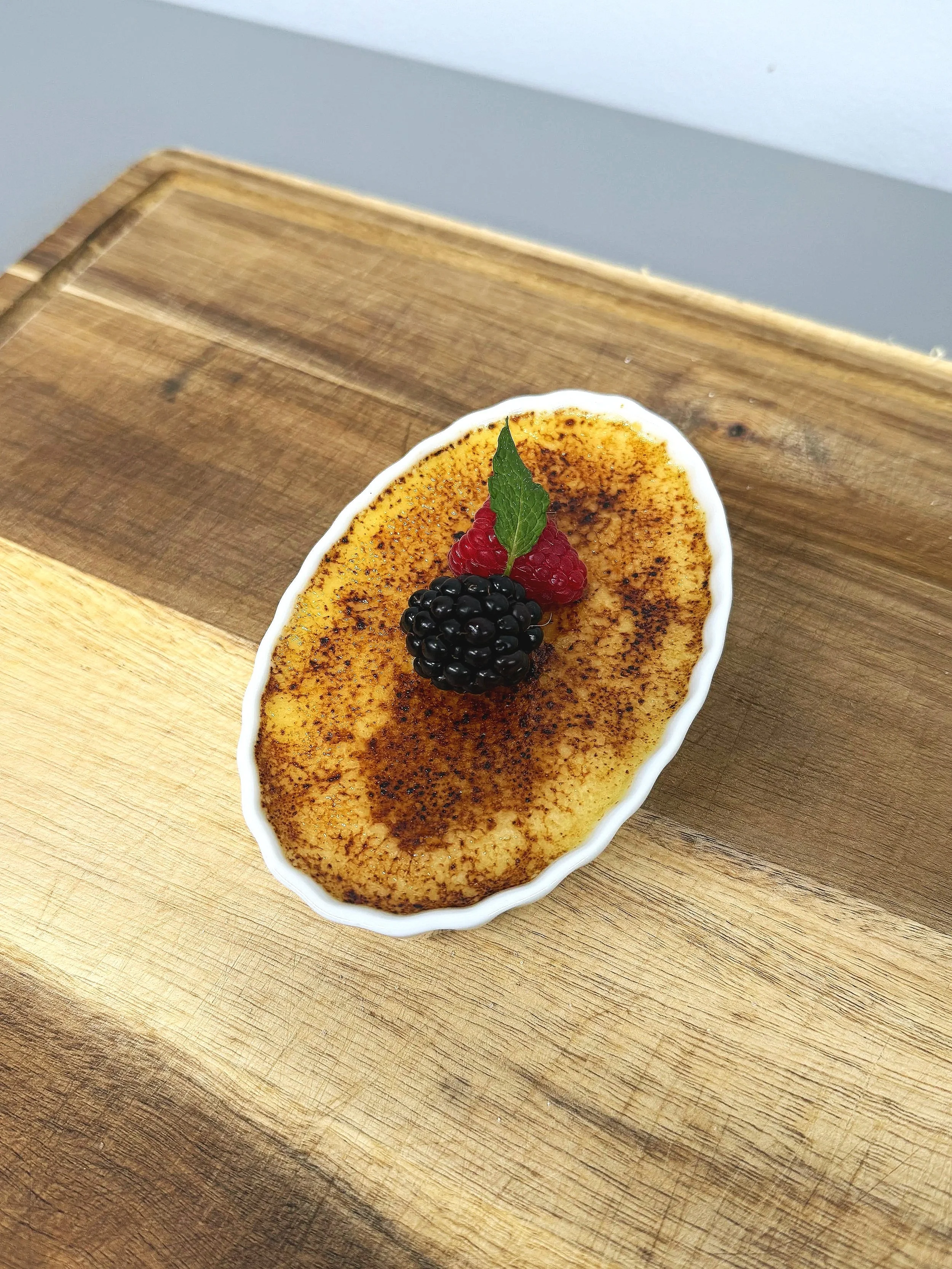
I prefer using shallow ramekins. I like a higher ratio of caramelized sugar to custard and less overall creaminess per bite. Use whatever size ramekins you like; just know the baking time may need adjustment.
If you don’t have a kitchen torch, you can use the oven broiler, but it’s honestly much worse. It works in an emergency, but a torch gives far better control and results.
The berries and mint were purely for presentation. I’m still learning how to make things look good—consider that part optional.
The water bath is essential. Baking the ramekins in hot water allows the custard to cook gently and evenly. The water regulates the temperature around the custard, preventing the edges from overcooking before the center sets. Without a water bath, the crème brûlée is much more likely to curdle, crack, or develop a grainy texture instead of staying smooth and creamy.