PERNIL
Ingredients
1 yellow onion
½ red bell pepper
½ yellow bell pepper
½ orange bell pepper
1 bunch cilantro
15 cloves (45g) garlic
2 tbsp (36g) salt
1 tbsp (1g) Dominican oregano
2 tbsp (24g) sazón
2 tbsp (24g) adobo
¼ cup (60ml) olive oil
¼ cup (60ml) white vinegar
1 lime, juiced
Method
Prepare the Pork – Clean the pork shoulder, cut the skin all the way back, and poke holes throughout the meat to help the marinade penetrate.
Make the Marinade (Part 1) – In a pilón, mash the salt, Dominican oregano, sazón, adobo, olive oil, white vinegar, lime juice, and garlic into a paste.
Make the Marinade (Part 2) – Add the yellow onion, bell peppers, and cilantro to a food processor and process until smooth. Add the garlic paste to the food processor and blend until fully combined.
Marinate the Pork – Rub the marinade into the pork thoroughly, making sure to work it into every crevice and hole.
Dry the Skin – Pat the skin dry, cover it generously with salt, and refrigerate uncovered to dry out the skin.
Preheat the Oven – Preheat the oven to 330°F (165°C).
Prepare for Roasting – Remove the pork from the refrigerator, carefully scrape off the salt from the skin, and pat it dry again.
Roast (Low and Slow) – Roast the pork at 330°F (165°C) for 3 hours.
Crisp the Skin – Increase the oven temperature to 450°F (230°C) and roast for an additional 1 hour, until the skin is crisp.
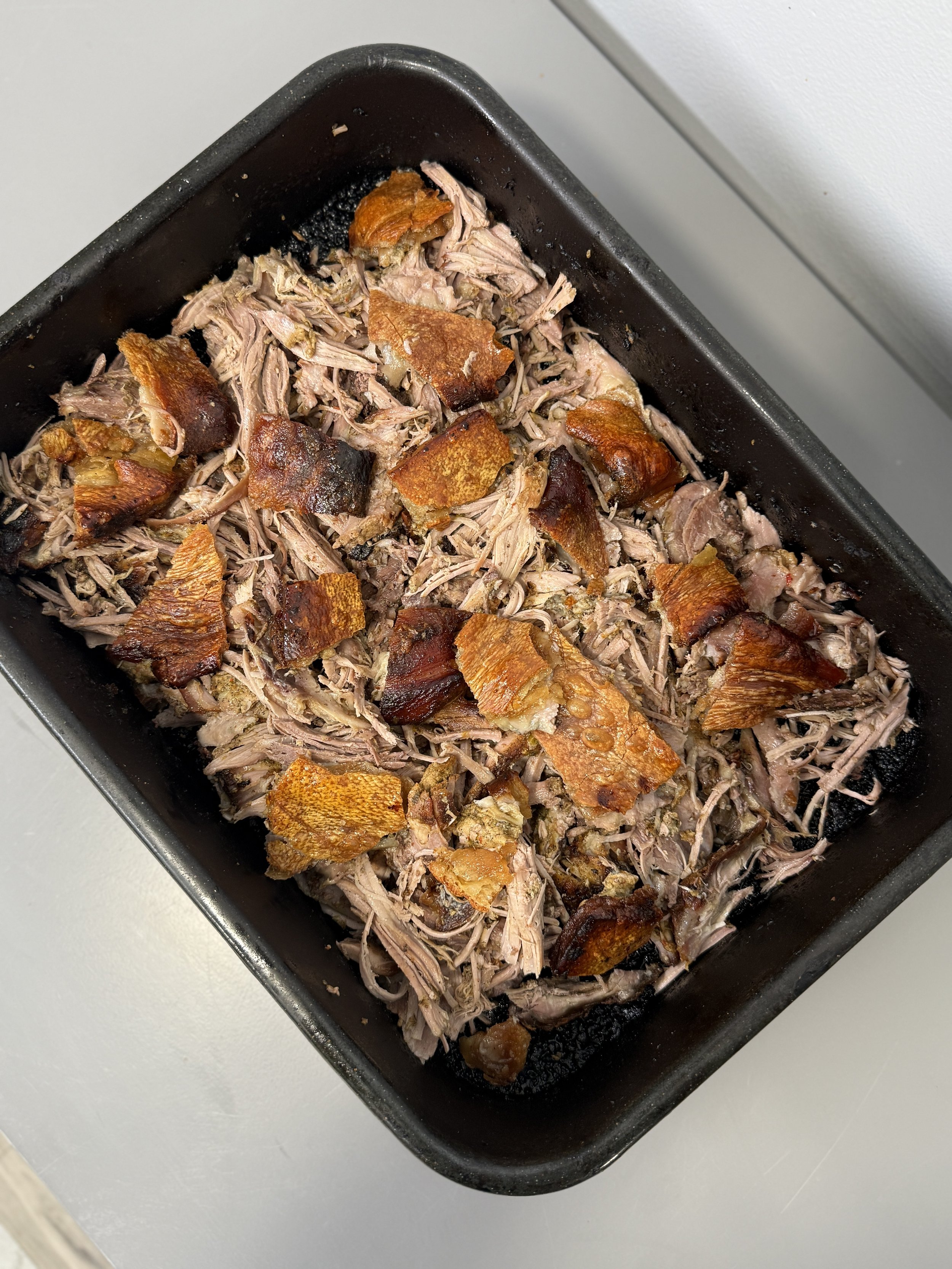
Finish and Serve – Remove the meat from the bone, place the skin on top, and serve.
Additional Notes
I’d recommend leaving this in the fridge overnight, but I only left it for about 6 hours because I needed to start cooking it the following day. As you can see, it still came out great, but I’d imagine a longer rest would result in even crispier skin.
The salt is used to dry out the skin, which is the key to getting it crispy. This step is imperative if you want crispy skin, which seems to be what most people enjoy most about pernil.
This recipe is fairly easy and very much set it and forget it, but the seasoning and the skin are the most important parts. Season generously, and make sure to poke holes throughout the meat. I prefer making a garlic paste so it really penetrates and seasons the meat, rather than just mincing garlic.
Take your time with the seasoning and skin preparation, and you’ll get it right every time.